

The Gut & Nutrition Edition
Your Gut Is a Living Pharmacy: Microbes, Vitamins, and the Missing Fine Print
Food, microbes, and the chemistry connecting them.
Begin reading
There is more happening than digestion
When you eat, the meal feeds more than you. Gut microbes can use components of food to make vitamins and other compounds, including short-chain fatty acids from fermentable carbohydrates (Intermediate role of gut microbiota in vitamin B nutrition (2022); Hays et al. Gut microbiota, short-chain fatty acids, and host health (2024)).
“Living pharmacy” is a useful metaphor, as long as we keep the fine print. A microbe's ability to make a molecule does not tell us how much you absorb, whether you need more, or whether changing that molecule improves a health outcome (Vitamin B-12 and the gastrointestinal microbiome: a systematic review (2022); Wastyk et al. Gut microbiota-targeted diets modulate human immune status (2021)).
This guide from Infinity Functional Performance separates the fascinating biology from claims that sound more settled than the evidence.
The short version
- Vitamins: Gut bacteria can make several B vitamins and forms of vitamin K, but food and appropriate supplementation remain important sources (Intermediate role of gut microbiota in vitamin B nutrition (2022); NIH Office of Dietary Supplements: Vitamin K).
- Fuel: Microbes ferment certain carbohydrates into acetate, propionate, and butyrate (Hays et al. Gut microbiota, short-chain fatty acids, and host health (2024)).
- Location: Where a nutrient is made matters because absorption is not identical throughout the intestine (Vitamin B-12 and the gastrointestinal microbiome: a systematic review (2022); Intermediate role of gut microbiota in vitamin B nutrition (2022)).
- Expectations: Microbiome changes in a study do not automatically mean better symptoms or prevention of disease (Wastyk et al. Gut microbiota-targeted diets modulate human immune status (2021)).
Production is only the first checkpoint
Imagine a factory making a useful product with no delivery truck. The product exists, but that does not guarantee it reaches the person who needs it. Gut-made nutrients face a similar practical question: are they produced in a form and location the body can use (Vitamin B-12 and the gastrointestinal microbiome: a systematic review (2022); Intermediate role of gut microbiota in vitamin B nutrition (2022))?
Microbes also use vitamins themselves, and some share metabolic products with other microbes. Their activity is an ecosystem, not a personalized supplement dispenser (Intermediate role of gut microbiota in vitamin B nutrition (2022)).
That is why an estimate based on microbial genes should not be described as the percentage of your daily requirement already covered. Capacity to manufacture and actual nutritional contribution are different measurements (Intermediate role of gut microbiota in vitamin B nutrition (2022); Vitamin B-12 and the gastrointestinal microbiome: a systematic review (2022)).
Feed the ecosystem. Do not ask it to replace the nutrients you know you need.
The vitamin story, with the limits included
| Compound | What is interesting | What not to assume |
|---|---|---|
| B vitamins | Different microbes have pathways for making and using B vitamins (Intermediate role of gut microbiota in vitamin B nutrition (2022)). | A “healthy microbiome” guarantees adequate status. |
| Vitamin B12 | Bacteria synthesize B12-related compounds, while normal human absorption depends on specialized processes in the small intestine (Vitamin B-12 and the gastrointestinal microbiome: a systematic review (2022)). | B12 made in the colon replaces reliable dietary or supplemental sources. |
| Vitamin K | Gut bacteria produce menaquinones, and vitamin K supports proteins involved in clotting and bone metabolism (NIH Office of Dietary Supplements: Vitamin K). | Microbial production supplies a fixed share of your needs or a supplement prevents heart disease. |
The B12 example is especially useful. Gut microbes make and use B12 and related compounds, but some related molecules are not active vitamins for humans; this is not a dependable strategy for preventing deficiency (Vitamin B-12 and the gastrointestinal microbiome: a systematic review (2022)).
If you avoid animal foods, have a known absorption problem, or have been told you are deficient, discuss reliable B12 sources and appropriate evaluation. Do not replace an established plan with a probiotic or an assumption that your bacteria will handle it (Vitamin B-12 and the gastrointestinal microbiome: a systematic review (2022)).
Vitamin K deserves a medication check, too. People taking warfarin or related anticoagulants should keep vitamin K intake consistent and discuss changes rather than suddenly adding a high-dose supplement (NIH Office of Dietary Supplements: Vitamin K).
Fiber becomes something different
Some carbohydrates escape digestion and reach microbes that can ferment them. Among the products are short-chain fatty acids, commonly shortened to SCFAs: acetate, propionate, and butyrate (Hays et al. Gut microbiota, short-chain fatty acids, and host health (2024)).
Butyrate is an important fuel for cells lining the colon. SCFAs also participate in signaling related to the gut barrier, immune system, and metabolism, which helps explain why they receive so much scientific attention (Hays et al. Gut microbiota, short-chain fatty acids, and host health (2024)).
That biology does not make a butyrate capsule a proven substitute for a varied diet or a treatment for every digestive complaint. The review literature describes promising mechanisms alongside uncertainty about interventions and long-term outcomes (Hays et al. Gut microbiota, short-chain fatty acids, and host health (2024)).
Fermented foods: promising, not magical
In a small trial of generally healthy adults, the fermented-food group increased microbiome diversity and showed decreases in several measured inflammatory proteins. The study was short and did not establish that fermented foods treat autoimmune disease, improve every person's digestion, or prevent a specific illness (Wastyk et al. Gut microbiota-targeted diets modulate human immune status (2021)).
Interestingly, the high-fiber group did not show the same increase in microbiome diversity during that intervention, even though microbial carbohydrate-processing capacity changed. More fiber and more diversity are not a guaranteed one-to-one equation (Wastyk et al. Gut microbiota-targeted diets modulate human immune status (2021)).
Try making the food decision practical rather than competitive. If they fit your needs, yogurt, kefir, or fermented vegetables can be options, not a requirement to tolerate something that consistently makes you feel worse.
A realistic way to support your gut
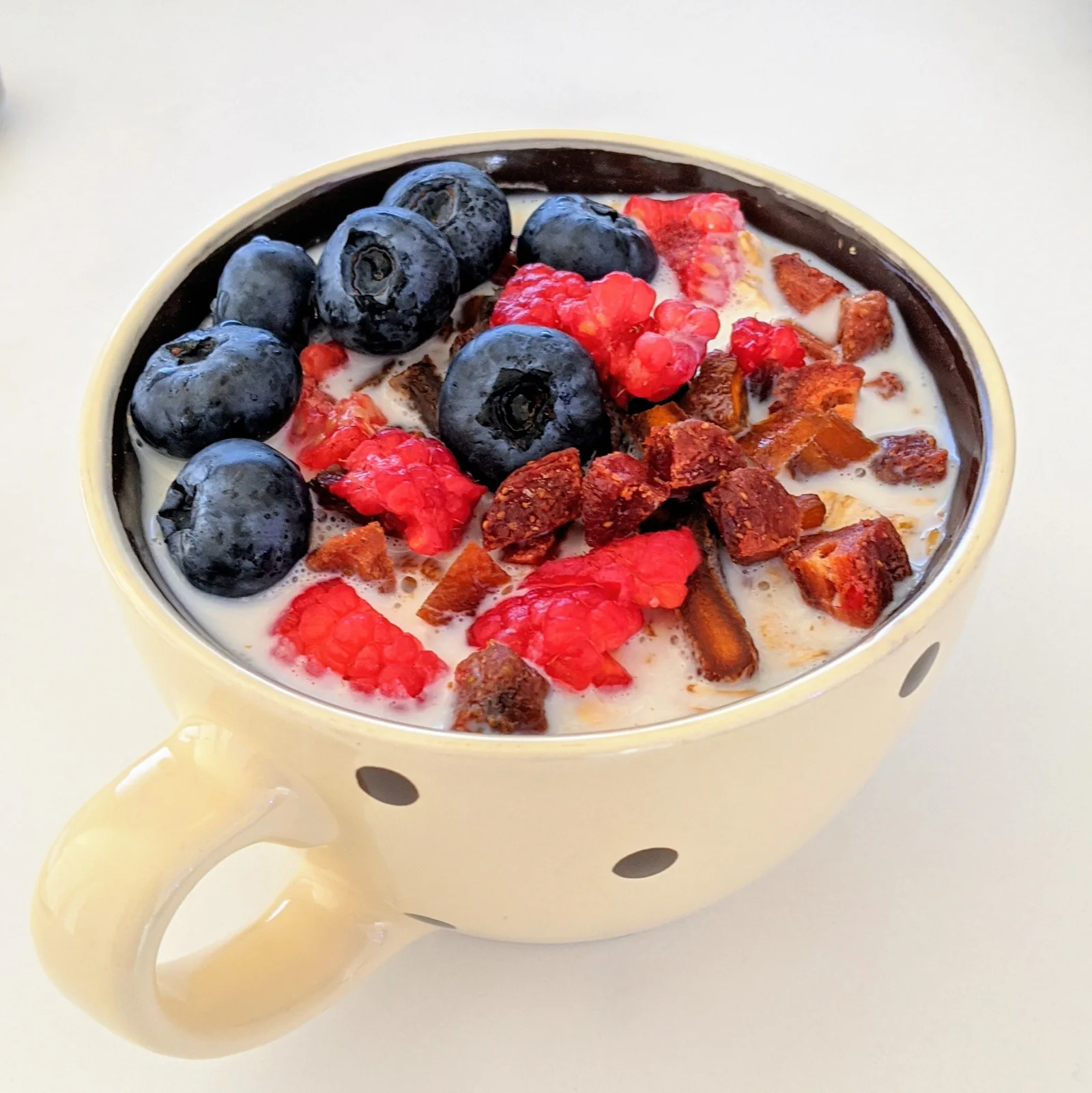
Start with foods you already enjoy. Consider adding oats at breakfast, beans to a meal, or another vegetable to your usual dinner rather than rebuilding your entire diet at once; fermentable food components provide substrates for microbial activity (Hays et al. Gut microbiota, short-chain fatty acids, and host health (2024)).
Use symptoms as information, not a test of willpower. A useful appointment conversation includes what you eat, your medication and supplement list, the timing of symptoms, and any previous nutrient deficiencies.
Avoid diagnosing “dysbiosis” from a vague symptom list. The studies discussed here do not turn fatigue, bloating, or mood changes into a specific microbiome diagnosis (Vitamin B-12 and the gastrointestinal microbiome: a systematic review (2022); Wastyk et al. Gut microbiota-targeted diets modulate human immune status (2021)).
For severe or worsening symptoms, blood in stool, persistent vomiting, or unexplained weight loss, seek medical care rather than trying to solve the problem with a content-derived supplement plan.
Frequently asked questions
Can my gut make all the vitamins I need?
No reliable evidence here supports that conclusion. Microbial vitamin production is real, but usable amounts depend on the compound, location, and host, and B12 is a clear example of why diet cannot be dismissed (Intermediate role of gut microbiota in vitamin B nutrition (2022); Vitamin B-12 and the gastrointestinal microbiome: a systematic review (2022)).
Is more microbiome diversity always better?
Diversity is a research measure, not a complete personal health score. An intervention can change microbial functions without raising diversity, as the high-fiber arm of the Wastyk trial illustrates (Wastyk et al. Gut microbiota-targeted diets modulate human immune status (2021)).
Should everyone take a probiotic?
The biology in this article does not establish a universal probiotic recommendation. Benefits and limitations depend on the intervention and clinical question; “supports the microbiome” is too broad to settle that decision (Hays et al. Gut microbiota, short-chain fatty acids, and host health (2024)).
Can gut-made chemicals influence the body?
Yes. SCFAs are one example of microbial metabolites involved in host signaling, but a plausible pathway is not proof that a particular product improves your mood, energy, or hormone levels (Hays et al. Gut microbiota, short-chain fatty acids, and host health (2024)).
The honest bottom line
Your gut microbes are active partners in nutrition and physiology, not a replacement for food, diagnosis, or needed treatment (Intermediate role of gut microbiota in vitamin B nutrition (2022); Vitamin B-12 and the gastrointestinal microbiome: a systematic review (2022)). The most useful takeaway is curiosity with boundaries: support the system without asking it to do more than the evidence shows.
Your next step
Bring your questions, medication list, and relevant results to a conversation with licensed medical providers. Infinity Functional Performance can help you explore whether an individualized evaluation is appropriate; no particular test, medication, or result is promised.
Visit ifp.life, call 972-619-5350, or email info@ifp.life to learn about becoming a patient.
Educational content only. This article is not a diagnosis, prescription, or substitute for individual medical advice. Do not start, stop, or adjust treatment based on a blog.
Numbered references
- Intermediate role of gut microbiota in vitamin B nutrition (2022)
- Vitamin B-12 and the gastrointestinal microbiome: a systematic review (2022)
- NIH Office of Dietary Supplements: Vitamin K
- Hays et al. Gut microbiota, short-chain fatty acids, and host health (2024)
- Wastyk et al. Gut microbiota-targeted diets modulate human immune status (2021)