

The Food Confidence Edition
Organic or Conventional? Keep More Good Food on Your Plate
What to buy, what the lists mean, and how to wash it.
Begin reading
More confidence in the produce aisle
You are standing in front of two boxes of berries. One is organic. The other costs less. Which should go in your cart?
Either can be a good choice. Organic and regular fruits and vegetables both offer helpful nutrients, so you do not have to buy organic to eat well. (Harvard Health)
The Dirty Dozen and Clean Fifteen can help you sort out your choices. Below, you will find the full 2026 lists, what they mean, and a few ways to make your food budget go further.
What the organic label means
Organic tells you how food was grown and handled. Farms must meet rules from the U.S. Department of Agriculture (USDA) to use this label. (USDA organic standards)
Pesticides are products used to control pests, such as bugs and weeds. Organic farms cannot use most man-made pesticides, but some approved products are allowed. (USDA organic standards)
Small amounts left on food are called residues. Organic foods tend to have lower pesticide residues than regular foods, but the label does not mean “pesticide-free.” (National Pesticide Information Center)
You may also see the word conventional. That means food grown with regular farming methods, rather than certified organic rules. Both kinds can be part of a healthy diet; choosing organic alone does not guarantee better health. (Harvard Health)
A trace is not the whole story
A lab may find a tiny trace of a pesticide on food. That tells us it is there, but not whether eating that food will cause harm. (EPA residue limits)
To judge risk, experts ask: What is the chemical? How much is there? How much might a person take in, and how often? (WHO pesticide guidance)
For example, a worker who sprays a pesticide may face a very different dose than a person who eats washed fruit. This does not mean every exposure is harmless; it means the amount and type of contact matter. (WHO pesticide guidance)
What U.S. food tests tell us
USDA tests foods for pesticide residues. The U.S. Environmental Protection Agency (EPA) uses this work to help judge risks from food, including risks for children. (USDA testing program)
In its 2024 report, released in December 2025, USDA said more than 99% of samples had residues below limits set by EPA. Some samples were over a limit, and some had residues with no set limit for that food, so this does not mean every sample passed every rule. (USDA 2024 report)
These limits are called tolerances. They help experts judge the amount in food, rather than just whether a trace was found, but they are not a promise of zero risk. (EPA residue limits)
Using the Dirty Dozen and Clean Fifteen
The Environmental Working Group (EWG) makes these lists from food test data. The Dirty Dozen ranks higher for pesticide residues in its guide, while the Clean Fifteen ranks lower. (Food Safety Magazine’s 2026 list report)
Think of them as shopping tools, not “safe” and “unsafe” labels. The rankings do not tell you your own health risk, and a food on the Clean Fifteen is not always free of residues. (Food Safety Magazine’s explanation of the method and its limits)
Two lists. One goal: keep fruits and vegetables on your plate.
Dirty Dozen
Higher in pesticide residues in EWG’s guide.
- Spinach
- Kale, collard and mustard greens
- Strawberries
- Grapes
- Nectarines
- Peaches
- Cherries
- Apples
- Blackberries
- Pears
- Potatoes
- Blueberries
Clean Fifteen
Lower in pesticide residues in EWG’s guide.
- Pineapple
- Sweet corn (fresh and frozen)
- Avocados
- Papaya
- Onions
- Sweet peas (frozen)
- Asparagus
- Cabbage
- Cauliflower
- Watermelon
- Mangoes
- Bananas
- Carrots
- Mushrooms
- Kiwi
Lists and order: EWG’s 2026 guide, as reported by Food Safety Magazine. Numbers show list order, not a health-risk score. If you want to lower some residues and can afford organic, start with foods you eat often. If organic costs too much, regular produce still counts. “Dirty” does not mean “do not eat,” and “clean” does not mean “no residues.” Read the list’s limits and Harvard Health’s shopping advice.How can I use these lists when I shop?
The leafy greens count as one group on the Dirty Dozen. Sweet corn includes fresh and frozen corn; the sweet peas on the Clean Fifteen are frozen. (PCC’s report on the 2026 lists)
Put your budget where it helps you
Want to lower some pesticide residues? Organic can be one option if it fits your budget. (National Pesticide Information Center) If its price means you would buy much less fruit and veg, regular produce is still a good choice. (Harvard Health)
Try this on your next shopping trip:
- Start with meals: Pick a few fruits and vegetables you know you will use.
- Compare prices: Check fresh, frozen, and in-season choices.
- Mix your cart: Buy some organic and some regular produce if that works for you.
- Cut waste: Buy an amount you can eat or freeze before it spoils.
Use the lists to help you shop, not to decide that your body needs a “detox.” They are not medical tests and do not show that you need supplements or hormone treatment. (Food Safety Magazine’s explanation of the rankings)
How to wash fruits and vegetables
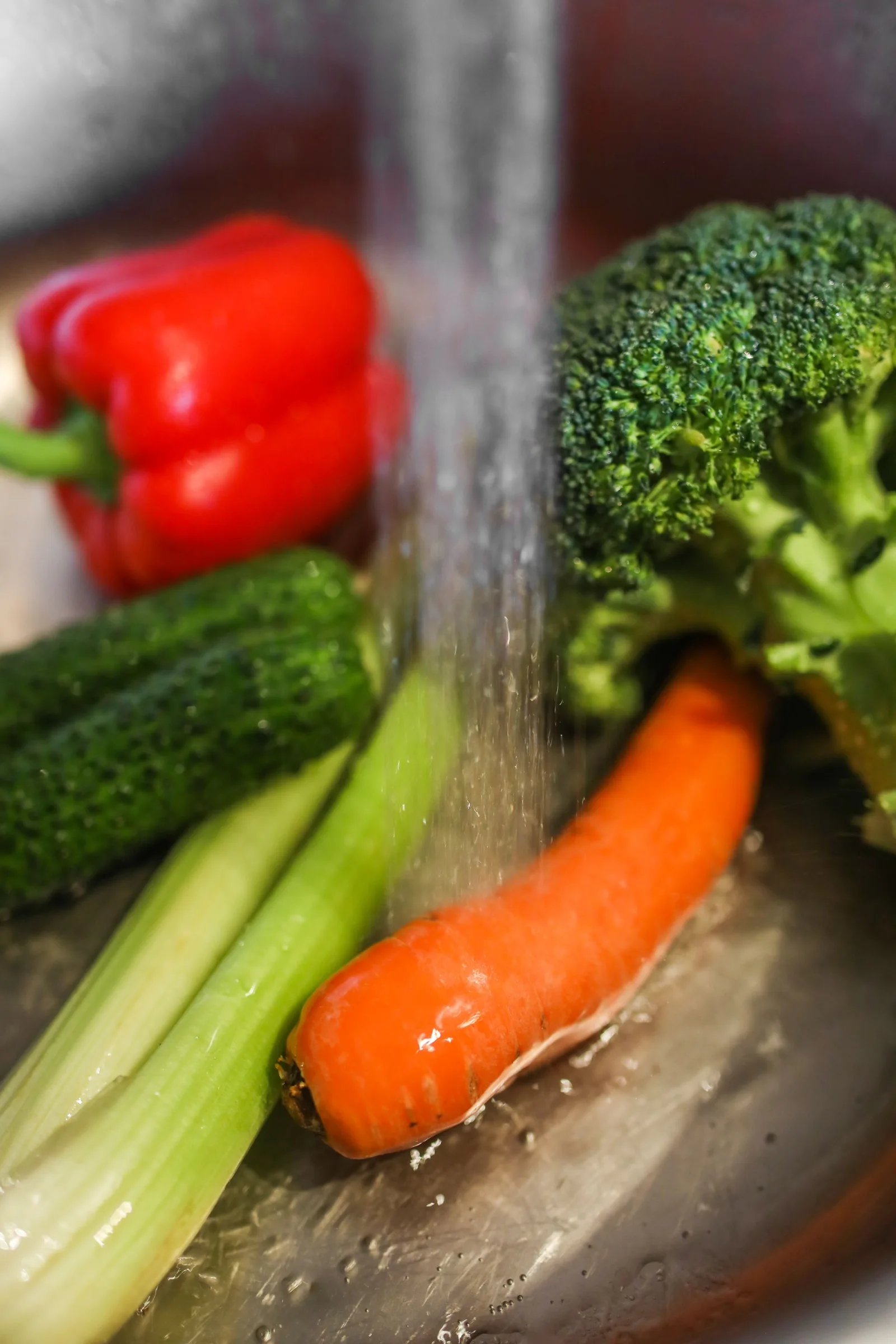
Keep it simple with running water. These steps come from the U.S. Food and Drug Administration (FDA). (FDA produce safety)
- Wash your hands: Use soap and water for at least 20 seconds before and after food prep. (FDA)
- Rinse the produce: Use running water, even if you plan to peel it. This helps keep dirt and germs from moving inside when you cut. (FDA)
- Scrub firm foods: Use a clean produce brush on foods such as melons and cucumbers. (FDA)
- Dry with a clean towel: Use a clean cloth or paper towel after rinsing. (FDA)
Skip soap, detergent, bleach, and commercial produce washes on food. Items marked “pre-washed” or “ready-to-eat” do not need another wash; follow the label. (FDA)
Washing helps reduce germs, but it does not remove them all. Keep prep surfaces clean, and keep raw meat and its juices away from ready-to-eat produce. (FDA)
The practical takeaway
Buy the berries you will enjoy and can afford. Both organic and regular produce can help you eat well, and safe washing matters for either kind. (Harvard Health; FDA)
If you are working on other food habits, try our guide to reading nutrition labels. It is another way to make everyday choices a little easier.
Your next step
Have questions about food choices and your health? Bring them to a visit with licensed medical providers at Infinity Functional Performance. We can discuss your needs and whether further care would help.
Visit ifp.life, call 972-619-5350, or email info@ifp.life to learn about becoming a patient.
Educational content only, not personal medical advice. Do not start, stop, or change treatment based on this article.
Numbered references
- Harvard Health: Understanding organic foods
- FDA: Selecting and serving produce safely
- National Pesticide Information Center: Organic food
- USDA: Organic standards
- EPA: Setting pesticide residue tolerances
- WHO: Pesticide residues in food
- USDA: Pesticide Data Program
- USDA: 2024 pesticide monitoring report, published 2025
- PCC Community Markets: Reporting on EWG’s 2026 lists
- Food Safety Magazine: 2026 EWG lists and methodology