

The Science of Signaling
Serotonin: The Signal, the Receptors, and the Response
One messenger. Many receivers. Follow serotonin from its building blocks to the pathways that shape a cell's response.
Begin reading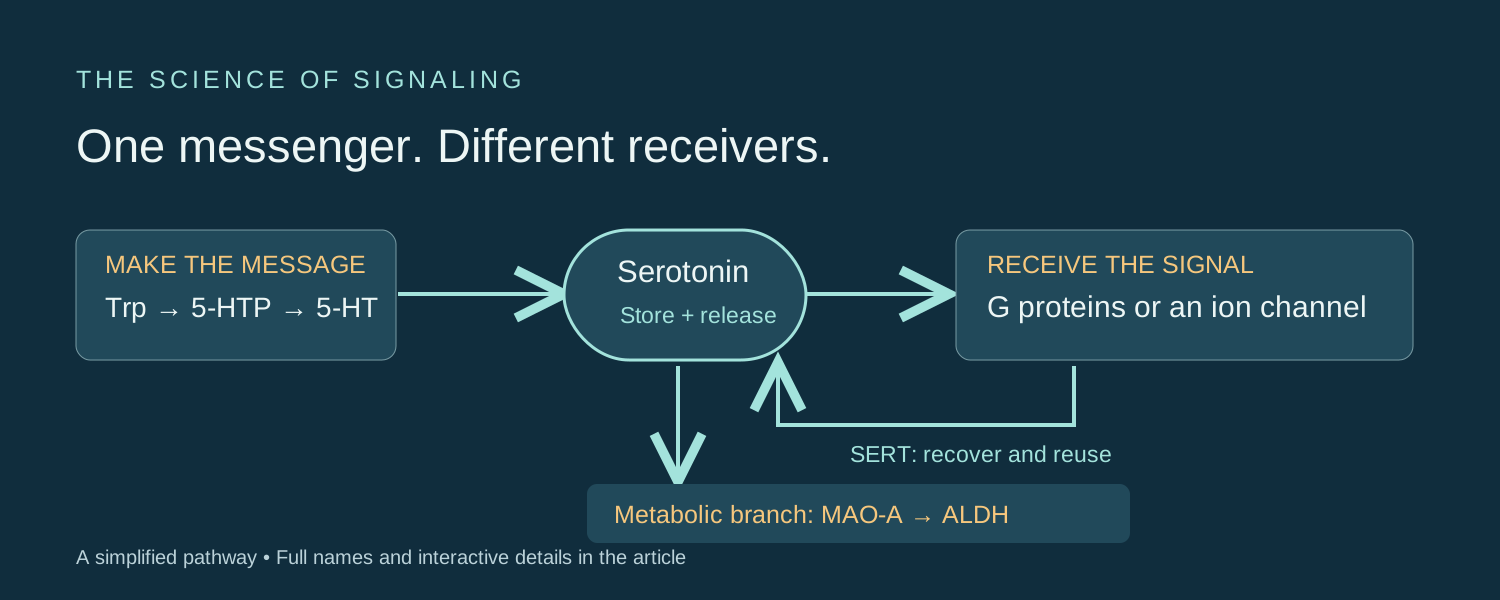
One messenger, many responses
Serotonin helps nerve cells coordinate functions including mood, sleep, appetite, learning, and the processing of pain; its effects depend on the receptors and circuits involved, not simply on whether there is “more” or “less.” Serotonin receptor review Its full chemical name is 5-hydroxytryptamine (5-HT), and serotonergic means related to serotonin. Basic Neurochemistry: Serotonin
Think of serotonin as a message and its receptors as different kinds of receivers. The same message can trigger different instructions depending on which receiver picks it up, much as one doorbell can turn on a chime, a light, or a phone notification.
This companion to Dopamine & Norepinephrine: The Life of a Nerve Signal follows a similar journey. Start with the clickable map, then explore the receptors; the complete names behind the abbreviations are collected near the end.
Follow a serotonin signal.
Reduced motion is on. Every step is available through the buttons.
Build serotonin from tryptophan
Tryptophan hydroxylase 2 (TPH2) makes 5-hydroxytryptophan (5-HTP). Aromatic L-amino acid decarboxylase (AADC) then makes 5-hydroxytryptamine (5-HT), or serotonin. Scientific basis
TPH2 uses tetrahydrobiopterin (BH4), ferrous iron (Fe²⁺), and oxygen (O₂). AADC uses pyridoxal 5′-phosphate (PLP), active vitamin B6. Read the physiology
and reuse
Schematic, not to scale; no concentration or treatment effect is simulated. Biochemical reference
Where serotonin begins
The starting material is L-tryptophan (Trp), an essential amino acid supplied by food; unlike the catecholamine pathway, serotonin synthesis does not start with phenylalanine becoming tyrosine. Basic Neurochemistry Tryptophan reaches the brain through a shared amino-acid transport system at the blood-brain barrier (BBB), competing with other large neutral amino acids; it must also enter the serotonin-producing nerve cell. Serotonin synthesis and transport
There are distinct central and peripheral serotonin pools: much of the body's serotonin is made by enterochromaffin cells in the gut, but circulating serotonin does not freely cross the blood-brain barrier to replenish brain serotonin. Serotonin physiology review Brain serotonin is made locally, largely by neurons in the brainstem's raphe nuclei, while serotonin in the gut has important local roles. Serotonin physiology review
That distinction makes the gut-brain conversation more interesting, not less important: two connected systems do not have to share one freely circulating supply of the same messenger. This article follows a simplified brain serotonin neuron rather than treating gut serotonin as a direct delivery service to the brain.
Making the messenger
Tryptophan becomes 5-HTP
In the nerve cell, tryptophan hydroxylase 2 (TPH2) converts tryptophan into 5-hydroxytryptophan (5-HTP); this is the pathway's rate-limiting step, a regulated reaction that helps set the pace of production. TPH2 review The reaction uses tetrahydrobiopterin (BH4), ferrous iron (Fe²⁺), and molecular oxygen (O₂). TPH2 cofactors, Basic Neurochemistry
“Hydroxylase” tells us that the enzyme adds a hydroxyl group to the molecule. A related enzyme, tryptophan hydroxylase 1 (TPH1), supports much of the peripheral serotonin supply; TPH2 is also found in enteric neurons, so “brain versus body” is a useful overview rather than an absolute tissue boundary. Serotonin biosynthesis
5-HTP becomes serotonin
Next, aromatic L-amino acid decarboxylase (AADC), also called DOPA decarboxylase (DDC), converts 5-HTP into serotonin by removing a carboxyl group. Basic Neurochemistry Its cofactor is pyridoxal 5′-phosphate (PLP), an active form of vitamin B6. Basic Neurochemistry
The short version is tryptophan → 5-HTP → serotonin: first hydroxylation, then decarboxylation. Basic Neurochemistry Knowing the ingredients explains normal physiology; it does not, by itself, establish that taking extra precursor or cofactor will improve a person's mood.
Store it and send it
Fresh serotonin is made in the cell's cytosol, the fluid outside its organelles, and vesicular monoamine transporter 2 (VMAT2) packages it inside storage vesicles. Basic Neurochemistry VMAT2 uses a hydrogen-ion (H⁺) gradient established by vesicular H⁺-adenosine triphosphatase (H⁺-ATPase), a pump powered by adenosine triphosphate (ATP). Basic Neurochemistry
When an electrical impulse reaches the nerve ending, calcium entry helps trigger vesicles to fuse with the cell membrane and release serotonin through exocytosis. Basic Neurochemistry The calcium ions (Ca²⁺) are a release signal; the serotonin molecule is sent intact rather than being broken down to cross the synaptic gap. Basic Neurochemistry
The sending side is presynaptic, the receiving side is postsynaptic, and the small space between them is the synaptic cleft. Basic Neurochemistry The drawing is a teaching model: serotonin can also act outside a tightly enclosed one-to-one synapse. Serotonin synthesis, release, and reuptake
The receptor decides the response
Serotonin receptors are grouped into seven families, 5-HT1 through 5-HT7; six families are G protein-coupled receptors (GPCRs), while 5-HT3 is a ligand-gated ion channel. Receptor structure and signaling A receptor is not the same as a transporter: the receptor receives a message, while a transporter moves a molecule across a membrane.
For a GPCR, serotonin binds on the outside and changes signaling machinery on the inside; for a 5-HT3 channel, binding opens a pathway for charged particles to move through the membrane. Receptor structure and signaling Select a receptor family below to see the main teaching pathway, remembering that real receptors can use additional branches and interact with other cell machinery. Hippocampal receptor signaling review
Same messenger. Different internal routes.
5-HT1: cAMP down
- Outside the cellSerotonin→
- Signal receivedGi/o protein→
- Inside the cellAC activity ↓→
- Inside the cellcAMP ↓
A common route reduces adenylyl cyclase (AC) activity and cyclic adenosine monophosphate (cAMP). Associated signaling can also affect ion channels. Receptor signaling reference
Includes 5-HT1A and 5-HT1B feedback receptors, but not every receptor in this family is an autoreceptor. Receptor-family context
Arrows show a simplified biochemical route, not the direction of a person's mood. All full names appear in the article's reference tables.
Inside the receiving cell
The cAMP-down route: 5‑HT1 and 5‑HT5
These families commonly couple to inhibitory/other G proteins (Gi/o); the Gi branch reduces the activity of adenylyl cyclase (AC), the enzyme that makes cyclic adenosine monophosphate (cAMP) from ATP. Receptor signaling review cAMP is a second messenger, an internal relay that helps turn an outside signal into a cell response. Receptor signaling review
Some associated G-protein signals also affect potassium and calcium channels, which can change electrical activity or transmitter release. Receptor signaling review “Less cAMP” does not translate into “less happiness”: a cell's biochemical response and a person's experience are different levels of explanation.
The calcium-and-lipid route: 5‑HT2
The 5-HT2 family includes 5-HT2A, 5-HT2B, and 5-HT2C; its main teaching pathway uses Gq/11, a G-protein family that activates phospholipase C (PLC). Serotonin receptor signaling PLC splits a membrane lipid called phosphatidylinositol 4,5-bisphosphate (PIP2) into inositol 1,4,5-trisphosphate (IP3) and diacylglycerol (DAG). Serotonin receptor signaling
IP3 helps release calcium from internal stores, while DAG and calcium participate in activating protein kinase C (PKC) and downstream signaling. Serotonin receptor signaling A kinase is an enzyme that changes other proteins by adding a phosphate group; think of this route as a chain of internal instructions rather than a single “on” switch.
The fast channel route: 5‑HT3
The 5-HT3 receptor is different: it is the ion channel itself, not a GPCR. Receptor structure review Opening it allows positively charged ions, including sodium (Na⁺) and potassium (K⁺), to move according to their gradients, producing a rapid electrical response; calcium permeability varies with channel composition. Serotonin physiology review
The cAMP-up route: 5‑HT4, 5‑HT6, and 5‑HT7
These families commonly couple to stimulatory G protein (Gs), increasing AC activity and cAMP production; cAMP can activate protein kinase A (PKA) and other downstream targets. Receptor signaling review It is the mirror-image teaching route to cAMP reduction, but its real-world effect still depends on the cell, location, and circuit.
The built-in feedback system
Some receptors detect serotonin released by the very neuron that carries them: these are autoreceptors. Basic Neurochemistry 5-HT1A autoreceptors on serotonin-cell bodies and dendrites can reduce firing, while terminal autoreceptors, especially 5-HT1B, can help limit further release. Serotonin feedback model and review, Human terminal-autoreceptor study
This is feedback, not a defect. Like a thermostat that responds to the room it helps regulate, the system can adjust its own output; those same receptor labels can also occur on other cells, where the role is not autoregulation. Receptor signaling review
Recycle or break down
SERT brings serotonin back
The serotonin transporter (SERT, also called 5-HTT) moves serotonin from outside the cell back into the presynaptic cytosol, using an ion-dependent transport process involving Na⁺ and chloride (Cl⁻). Basic Neurochemistry This process is reuptake, not chemical destruction; recovered serotonin can be repackaged by VMAT2 or enter a metabolic pathway. Serotonin synthesis and reuptake
Diffusion and uptake by other cells also contribute to clearing extracellular serotonin. Serotonin physiology review Reuptake and recycling are therefore an important part of the story, not the only possible exit.
MAO-A and ALDH change the molecule
Monoamine oxidase A (MAO-A), an enzyme at the outer mitochondrial membrane, preferentially metabolizes serotonin, producing 5-hydroxyindoleacetaldehyde (5-HIAL). Basic Neurochemistry, Monoamine oxidase review MAO enzymes use flavin adenine dinucleotide (FAD) as a bound cofactor; aldehyde dehydrogenase (ALDH) then uses oxidized nicotinamide adenine dinucleotide (NAD⁺) to oxidize the aldehyde into 5-hydroxyindoleacetic acid (5-HIAA), a major serotonin metabolite. Monoamine oxidase review, Basic Neurochemistry
Monoamine oxidase B (MAO-B) is a related enzyme with overlapping substrate possibilities, but MAO-A is the main isoform emphasized in normal serotonin breakdown. Monoamine oxidase review This is not the dopamine/norepinephrine catechol-O-methyltransferase (COMT) route: serotonin is an indoleamine, and its principal metabolic pathway is the MAO/aldehyde pathway described here. Basic Neurochemistry, Monoamine oxidase review
The simplified route is serotonin → 5-HIAL → 5-HIAA. Basic Neurochemistry This is a branch rather than a required final step after every signal: a molecule may be reused, and metabolism can also occur before it has been released. Serotonin synthesis and reuptake
Brain, body, and circuit
Serotonin neurons project from the brainstem to many regions, including the hippocampus and cortex, where their receptor-dependent actions contribute to learning, emotional processing, and other functions. Receptor signaling review Other pathways descend toward the spinal cord and participate in pain modulation; the wider descending control system can inhibit or facilitate pain signals rather than operating as a universal pain-off switch. Pain perception and modulation review
Outside the brain, serotonin also contributes to gastrointestinal signaling and other bodily functions. Serotonin biosynthesis review This helps explain why a treatment that changes serotonin signaling can have effects in more than one organ system. Serotonin physiology review
When signaling changes
A pathway can change at several points: how much messenger is synthesized, how it is stored or released, how quickly it is retrieved or metabolized, and how receptors respond. Serotonin synthesis and reuptake Those differences are useful questions for research and clinical reasoning, but this diagram cannot diagnose an individual's neurotransmitter level or select a treatment.
For example, reducing SERT-mediated uptake changes how long serotonin remains available outside the cell; activating a receptor directly changes the receiving machinery instead. Drug-interaction review, Receptor structure review The distinction is the foundation for understanding medications without assuming that all serotonin-related drugs do the same thing.
The medication connection
Selective serotonin reuptake inhibitors (SSRIs) primarily inhibit SERT, making serotonin more available for receptor signaling; they are not simply direct serotonin-receptor activators. Receptor signaling review Changes in transport can occur before clinical benefit, and adaptations in feedback and neural networks are part of the continuing explanation for their effects over time. Receptor signaling review
Other treatments can act at receptors, affect multiple transporters, or alter metabolism, so “serotonergic” describes a connection to a system rather than one identical drug mechanism. Drug-interaction review Use the comparison below as a mechanism preview, not a ranking of treatments or a guide to combining substances.
Which part of the pathway changes?
Selective serotonin reuptake inhibitors primarily block SERT. They change serotonin availability indirectly rather than simply turning on a serotonin receptor. Read the evidence
This compares mechanisms, not effectiveness, approved indications, doses, or safety. Do not combine substances or change medication based on this graphic.
More signaling is not automatically better: serotonin toxicity can produce agitation or confusion, heavy sweating, fever, tremor, muscle rigidity, and abnormal reflexes, especially with certain combinations of serotonergic agents. Serotonin toxicity review New severe symptoms, particularly fever with confusion or marked muscle stiffness, need urgent medical evaluation; medication changes and combinations should be reviewed with a licensed medical provider rather than tried from a pathway diagram.
Coming in future editions
Future articles will build on this foundation, separating the biology from the evidence for a particular treatment:
- SSRIs and other antidepressants: how reuptake inhibition, receptor actions, feedback adaptation, and clinical response differ across treatments.
- MDA and MDMA: how 3,4-methylenedioxyamphetamine (MDA) and 3,4-methylenedioxymethamphetamine (MDMA) affect monoamine transport and release, and why their receptor actions and experiences are not interchangeable. Entactogen pharmacology review
- LSD and receptor-directed signaling: how lysergic acid diethylamide (LSD) interacts with serotonin receptors, particularly 5-HT2A, and why this differs from blocking serotonin reuptake. Controlled comparison of LSD, MDMA, and d-amphetamine
- Clinical evidence, interactions, and individual variation: what research can and cannot tell us, including the distinction between an established clinical use, an investigational use, and a proposed mechanism.
These compounds should not be grouped together as interchangeable antidepressants: their pharmacology and clinical evidence differ. Controlled comparison, Drug-interaction review Future editions will evaluate those differences without implying that receptor activation alone proves benefit or safety.
Your plain-language reference
The names below cover the major molecules, enzymes, transport systems, and intracellular relays used in this article and its graphics. They are a reading aid, not a supplement checklist.
| Abbreviation | Full name | Job in this explanation |
|---|---|---|
| Trp | L-tryptophan | Amino-acid starting material |
| BBB | Blood-brain barrier | Selective boundary between blood and brain |
| 5-HTP | 5-hydroxytryptophan | Intermediate made before serotonin |
| 5-HT | 5-hydroxytryptamine, or serotonin | The messenger |
| TPH1 / TPH2 | Tryptophan hydroxylase 1 / 2 | Related enzymes that make 5-HTP |
| BH4 | Tetrahydrobiopterin | Chemical helper for hydroxylation |
| Fe²⁺ / O₂ | Ferrous iron / molecular oxygen | Components required for the hydroxylation reaction |
| AADC / DDC | Aromatic L-amino acid decarboxylase / DOPA decarboxylase | Two names for the enzyme that converts 5-HTP to serotonin |
| PLP | Pyridoxal 5′-phosphate | Active vitamin B6 cofactor used by AADC |
| VMAT2 | Vesicular monoamine transporter 2 | Loads serotonin into a storage vesicle |
| H⁺-ATPase | Hydrogen-ion adenosine triphosphatase | Pump that builds the vesicle's proton gradient |
| ATP / H⁺ | Adenosine triphosphate / hydrogen ion (proton) | Energy carrier / ion used in the vesicle gradient |
| Ca²⁺ | Calcium ion | Helps trigger release; also an intracellular signal |
| SERT / 5-HTT | Serotonin transporter | Returns serotonin across the cell membrane |
| Na⁺ / Cl⁻ / K⁺ | Sodium / chloride / potassium ions | Charged particles involved in transport or electrical signaling |
| MAO-A / MAO-B | Monoamine oxidase A / B | Related mitochondrial enzymes; MAO-A preferentially handles serotonin |
| FAD | Flavin adenine dinucleotide | Bound cofactor used by MAO |
| ALDH / NAD⁺ | Aldehyde dehydrogenase / oxidized nicotinamide adenine dinucleotide | Enzyme and cofactor in aldehyde oxidation |
| 5-HIAL / 5-HIAA | 5-hydroxyindoleacetaldehyde / 5-hydroxyindoleacetic acid | Intermediate / major end metabolite |
| COMT | Catechol-O-methyltransferase | Catecholamine enzyme, not the main serotonin-clearance route |
Biochemical reference for the table: Basic Neurochemistry, TPH2 review, and Monoamine oxidase review.
| Abbreviation | Full name or meaning | Job in receptor signaling |
|---|---|---|
| GPCR | Guanine nucleotide-binding protein-coupled receptor, usually shortened to G protein-coupled receptor | Translates an outside signal into intracellular activity |
| Gi/o / Gq/11 / Gs | Inhibitory/other, q/11-family, and stimulatory G proteins | Names of major signaling-protein families |
| AC / cAMP | Adenylyl cyclase / cyclic adenosine monophosphate | Enzyme / second messenger it produces |
| PKA / PKC | Protein kinase A / protein kinase C | Enzymes that change downstream protein activity |
| PLC | Phospholipase C | Splits PIP2 to create two internal signals |
| PIP2 | Phosphatidylinositol 4,5-bisphosphate | Membrane lipid used by PLC |
| IP3 / DAG | Inositol 1,4,5-trisphosphate / diacylglycerol | Intracellular signaling products |
| 5-HT1–5-HT7 | Serotonin receptor families 1 through 7 | Different receivers for serotonin |
| SSRI | Selective serotonin reuptake inhibitor | Drug class that primarily inhibits SERT |
| MDA / MDMA | 3,4-methylenedioxyamphetamine / 3,4-methylenedioxymethamphetamine | Related compounds with monoamine-releasing and receptor effects |
| LSD | Lysergic acid diethylamide | Psychedelic with important serotonin-receptor actions |
Receptor and drug reference for the table: Receptor signaling review, Entactogen pharmacology, and Controlled drug comparison.
The take-home message
Serotonin signaling is a coordinated cycle: make the messenger, package it, release it, receive the signal, then recover or metabolize it. Basic Neurochemistry The receptor and the surrounding circuit determine what that message means, which is why understanding the pathway is more useful than calling serotonin simply a “happiness chemical.” Receptor signaling review
Use this map to ask better questions about how a treatment works and what evidence supports it. Personal decisions belong in a conversation with a licensed medical provider who can connect the biology to your symptoms, history, medications, and goals.