
The Sustainable Progress Edition
Weight-Loss Care: Habits, Medicines, and Long-Term Health
Nourishment, strength, and a plan that fits your life.
Begin reading
The short version
Weight-loss medicine can make hunger easier to manage. It works best as part of a plan that also includes good food, movement and follow-up care. (NIDDK)
Think beyond the next weigh-in. Your plan should help you eat enough, stay strong and feel well while you lose weight. (Joint nutrition advisory)
Your medicine is one part of the plan. Open each topic to explore the rest.
Food that nourishes
Smaller portions still need good nutrition. Include protein, a variety of foods and enough fluid for your needs. Read the guidance
Strength and movement
Muscle matters while you lose weight. Pair protein with strength exercise that fits your abilities. Read the guidance
Hormone care that fits
Check for and treat hormone problems when needed. Symptoms, history and appropriate tests guide care, not a one-size-fits-all hormone plan. Read the guidance
A comfortable gut
Tell your care team about nausea or constipation. Food choices, fluids and changes to your care plan can help. Read the guidance
Build a foundation you can repeat
Less hunger can be a relief. But eating less also makes it easier to miss protein, vitamins and fluids your body needs. (Joint nutrition advisory)
Keep meals simple:
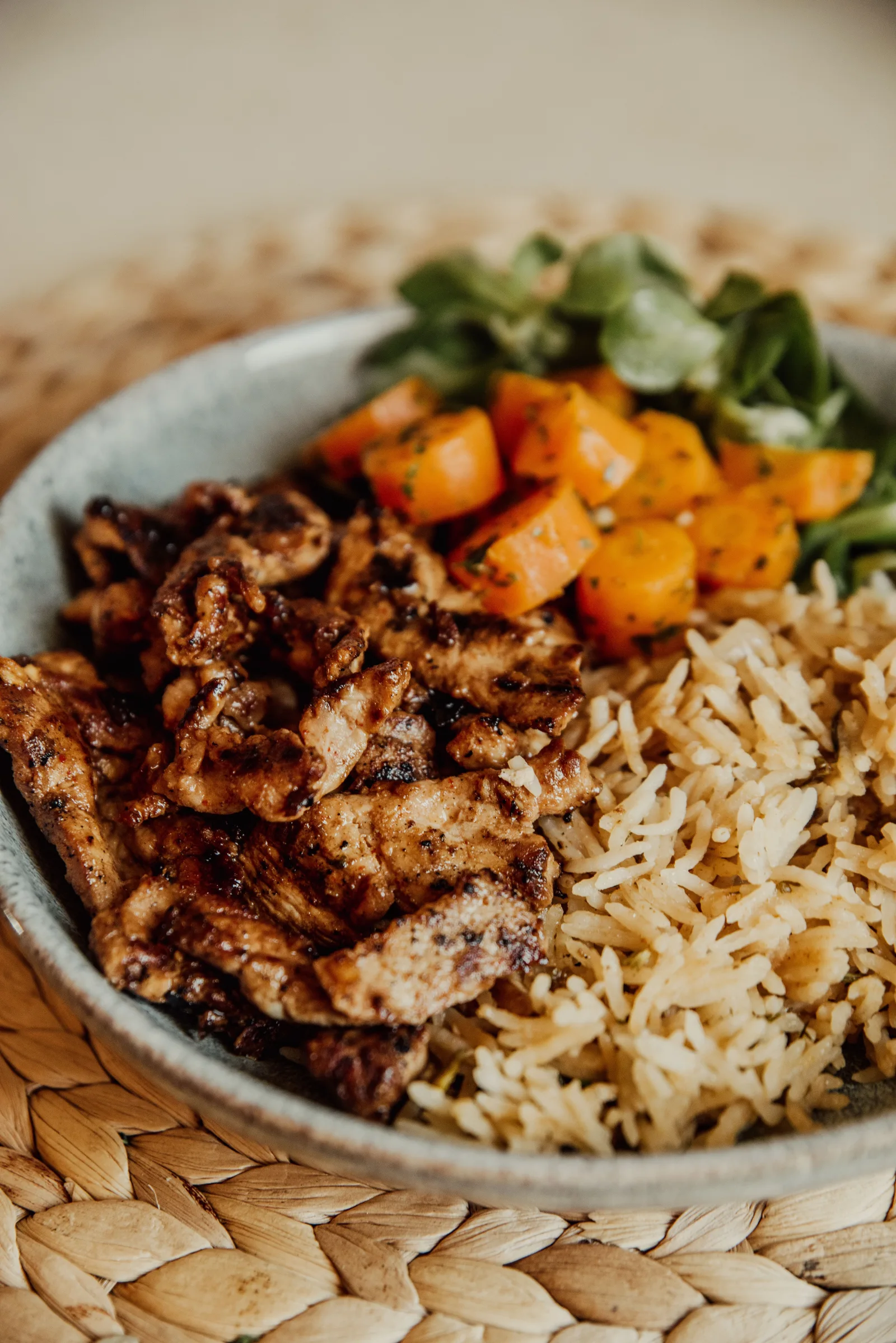
- Include protein: Try eggs, fish, chicken, tofu, beans or plain yogurt. Protein helps support muscle during weight loss. (Nutrition advisory)
- Add variety: Fruit, vegetables and whole grains help provide fiber and other nutrients. Choose foods you enjoy and can keep eating. (Nutrition advisory)
- Make portions comfortable: Smaller meals may feel better when you get full quickly. A dietitian can help set food and fluid goals that fit your health, including kidney problems. (Nutrition advisory)
Keep your strength
Losing weight can mean losing muscle as well as fat. Strength exercise helps protect muscle, and protein alone does not take its place. (Joint nutrition advisory)
Start where you are. Chair stands, resistance bands or light weights may fit your day; walking, cycling or swimming can add movement you enjoy. Build up at a pace your health allows, with guidance when needed. (NIDDK; Nutrition advisory)
Include hormone health
Hormone care belongs in the conversation, not outside the weight-loss plan. A thyroid problem, polycystic ovary syndrome (PCOS) or low testosterone may need its own care when symptoms and testing point to it. (European Society of Endocrinology guideline)
Tell your provider about changes such as irregular periods, low sex drive or ongoing symptoms of thyroid disease. The guideline recommends thyroid testing for people with obesity; other hormone tests depend on symptoms and medical history, rather than the same large panel for everyone. (Endocrine guideline)
Menopause symptoms matter, too. Treating hot flashes or poor sleep may make daily life and healthy habits easier, but menopause hormone therapy is not a weight-loss drug. (Menopause hormone therapy review)
The goal is to find and treat a real problem, not push hormone levels higher to speed weight loss. Thyroid medicine is not a weight-loss treatment when thyroid function is normal. (Endocrine guideline)
Help your gut feel better
Gut health starts with being able to eat, drink and have comfortable bowel movements. These medicines can slow stomach emptying and cause nausea, constipation or diarrhea, especially as treatment changes. (Joint nutrition advisory)
- For nausea: Try smaller meals and avoid large, greasy meals. Tell your care team if symptoms make eating difficult. (Nutrition advisory)
- For constipation: Fluids and a gradual increase in fiber may help. Adjust the plan with your provider if you have fluid limits or ongoing symptoms. (Nutrition advisory)
- For gut bacteria: A varied diet supplies fiber that many helpful microbes use. Research does not show that everyone needs a probiotic or a “gut reset” to make weight-loss medicine work. (Nutrition advisory)
How the medicines help
Semaglutide and tirzepatide act on signals that help control hunger and food intake. Approved weight-management products can help eligible patients when used with food and activity changes. (NIDDK)
| Medicine | Signals it acts on | What to know |
|---|---|---|
| Semaglutide | GLP-1 | Approved weight-management products are available for eligible patients. (NIDDK) |
| Tirzepatide | GIP and GLP-1 | Approved weight-management products are available for eligible patients. (NIDDK) |
| Retatrutide | GIP, GLP-1 and glucagon | Still being studied. It is not FDA-approved and cannot legally be compounded under the federal rules FDA describes. (Lilly research update; FDA) |
GLP-1 means glucagon-like peptide-1. GIP means glucose-dependent insulinotropic polypeptide; these are hormone signals involved in how the body responds to food. (Nutrition advisory)
What one study found
In the 72-week SURMOUNT-5 study, average weight loss was 20.2% with tirzepatide and 13.7% with semaglutide. The study included 751 adults with obesity who did not have diabetes. (American College of Cardiology)
Those are group averages, not a promise. The study used weekly injections at the highest tolerated study dose: tirzepatide 10 or 15 mg, or semaglutide 1.7 or 2.4 mg; it did not test every dose or form, and it did not compare retatrutide. (American College of Cardiology)
The best fit also depends on side effects, your health, cost and access. A larger average on a chart is only one part of that choice. (NIDDK)
Stay comfortable and safe
Talk about side effects early so your provider can adjust your care. Severe or lasting belly pain, repeated vomiting or trouble keeping fluids down needs prompt medical attention. (Nutrition advisory; Zepbound prescribing information)
Before treatment, review pregnancy plans, major stomach problems and all medicines with your provider. Semaglutide and tirzepatide weight-management products should not be used with a personal or family history of medullary thyroid cancer (MTC), or multiple endocrine neoplasia type 2 (MEN 2); weight-loss medicines are not for use during pregnancy. (NIDDK)
Tirzepatide can make birth-control pills less reliable. Its label advises a non-oral method or added barrier protection for four weeks after starting and four weeks after each dose increase; discuss the choice with your prescriber. (Zepbound prescribing information)
Use a licensed prescriber and pharmacy. Do not increase doses on your own or treat online “research” products as approved medicines. (FDA)
Progress is broader than the scale
At follow-up, talk about strength, food intake, daily activity and how you feel, as well as weight. These details help your care team spot problems and support your health. (Nutrition advisory)
Bring up loud snoring, breathing pauses or daytime sleepiness. Sleep apnea needs its own assessment, and losing weight does not automatically mean you can stop prescribed sleep-apnea treatment. (FDA: Weight care and sleep apnea)
Plan for the long term before changing or stopping medicine. Weight regain is common after stopping, so discuss ongoing care, cost and a maintenance plan with your prescriber. (NIDDK)
The bottom line
Weight-loss medicine is one tool in a larger plan. Food, strength exercise, gut comfort and appropriate hormone care all deserve attention; the aim is better health, not simply the fastest drop on the scale. (Nutrition advisory; Endocrine guideline)
Your next step
What feels hardest right now: hunger, meal planning, low energy or side effects? Bring that question, your medication list and any recent test results to your visit with licensed medical providers at Infinity Functional Performance.
Visit ifp.life, call 972-619-5350, or email info@ifp.life. We can talk through whether an individual evaluation is right for you.
This article is for education, not personal medical advice. Make treatment changes with your own licensed medical provider.
Numbered references
- NIDDK: Prescription medications to treat overweight and obesity
- American College of Cardiology: SURMOUNT-5 head-to-head trial (2025)
- Lilly: Retatrutide research update (September 15, 2026)
- FDA: Concerns with unapproved GLP-1 drugs
- FDA: Tirzepatide approval for OSA with obesity (2024)
- Joint GLP-1 nutrition advisory (2025)
- European Society of Endocrinology: Endocrine work-up in obesity
- Clinical review: Menopause hormone therapy in weight management (2026)
- FDA: Zepbound prescribing information (2026)